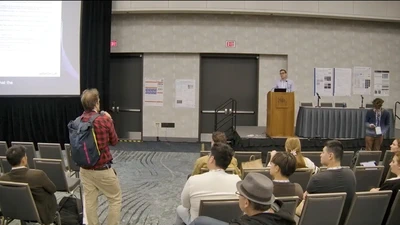
Continual Learning for Particle Accelerators
Unfortunately, I could not travel to the conference, thanks to Malachi Schram for presenting this spotlight Talk on our paper "Continual Learning for Particle Accelerators"
admin
Unfortunately, I could not travel to the conference, thanks to Malachi Schram for presenting this spotlight Talk on our paper "Continual Learning for Particle Accelerators"
We present an uncertainty-aware online ensemble method for handling non-stationary data streams in fusion science applications. The approach dynamically weights multiple models …
This paper addresses the challenge of continual learning in particle accelerators, where machine learning models must adapt to changing data distributions and system configurations …
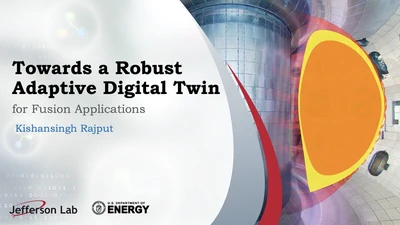
Talk Talk on developing robust adaptive digital twins with uncertainty awareness for fusion science applications.
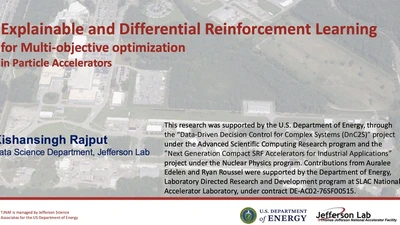
Invited Talk Explainable and Differential Reinforcement Learning for Multi-objective Optimization in Particle Accelerators
Hydra is an advanced framework designed for training and managing AI models for near real time data quality monitoring at Jefferson Lab. Deployed in all four experimental halls, …
This paper presents results from ongoing efforts to develop continual learning methods for particle accelerators. We address the challenge of model adaptation to changing …

Invited Talk Continual/Lifelong machine learning for ever drifting particle accelerator data at IBIC 2025, University of Liverpool, UK.
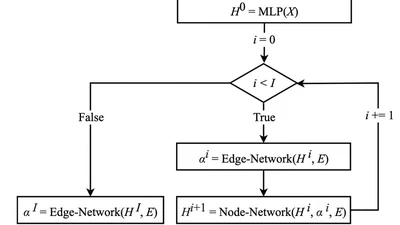
Graph Neural Networks (GNN) applied to track charged particle tracking at GlueX experiment at Jefferson Lab. GNN shows better performance compared to traditional method while being …
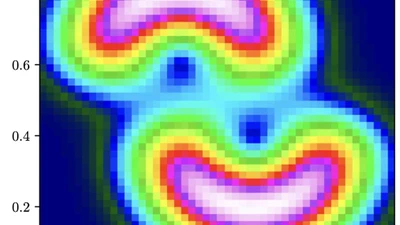
We introduce a differential sampling method called the local orthogonal inverse transform sampling (LOITS) algorithm. We validate its performance through a closure test, …
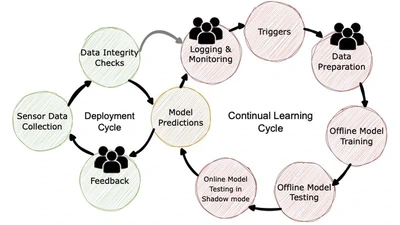
Particle accelerators rely on the precise synchronization of thousands of components, but data distribution drifts often limit the long-term deployment of machine learning …
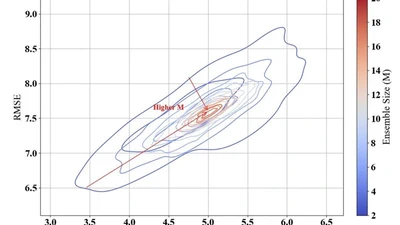
A Scalable Asynchronous Generative Inverse Problem Solver (SAGIPS) on high-performance computing systems. We present a workflow that utilizes an asynchronous ring-allreduce …
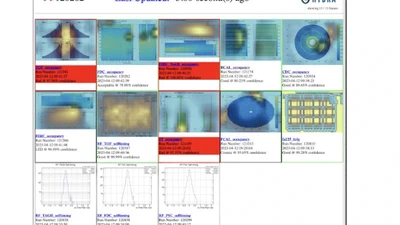
Hydra is a system that utilizes computer vision to perform near real time data quality monitoring. Since then, it has been deployed across all experimental halls at Jefferson Lab, …
This paper presents a distance-preserving machine learning approach for making uncertainty-aware predictions of accelerator capacitance. The method preserves geometric …
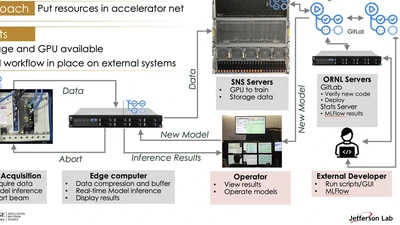
Invited Talk Talk on application of conditional machine learning models to predict anomalies before they occur at SNS accelerator.

Invited Talk Long term software steward requires composable modular development and management.
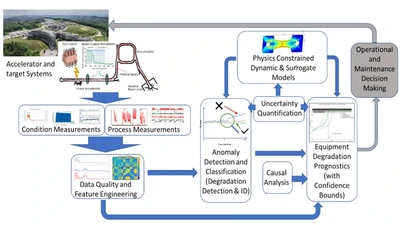
Invited Talk Current progress on machine learning applications for particle accelerators and its scope for Fusion Science.
This paper presents results from the AI4EIC Hackathon, specifically focusing on particle identification (PID) with the ePIC dRICH detector. Machine learning techniques were applied …

Guest Lecture Guest lecture within the graduate particle accelerators class at ODU department of physics.
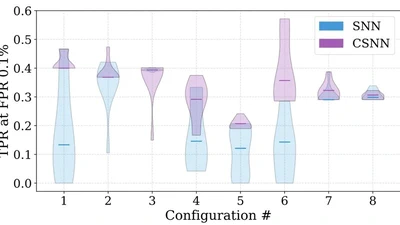
Conditional Models to handle data drifts due to changes in beam configuration changes at SNS accelerator.
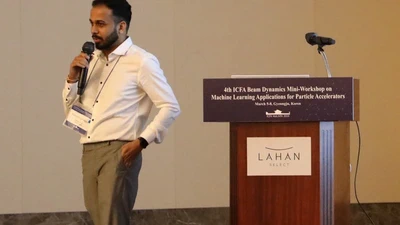
Invited Talk Application of Machine Learning to improve accelerator operation, application of conditional models to predict anomalies at SNS accelerator.
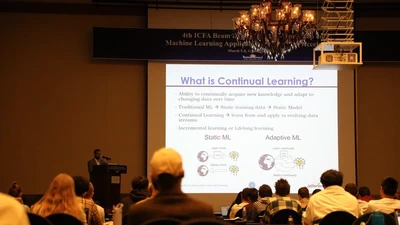
Invited Tutorial Lecture on Model up-keep / Continual Learning for Particle Accelerators at MaLAPA 2024, Gyeongju, South Korea.
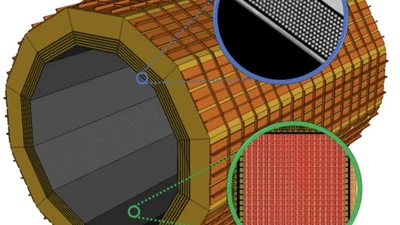
This is an opportune time for artificial intelligence (AI) to be included from the start at the upcoming Electron Ion Collider facility and in all phases that lead up to the …

Scientific Optimization Control Toolkit (SOCT) is an open-source Python framework built on OpenAI Gymnasium for designing and deploying reinforcement learning agents for scientific …
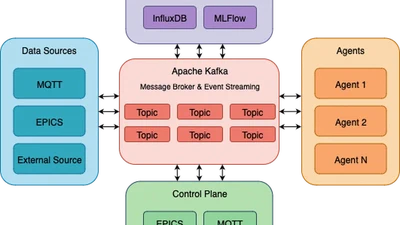
Scientific Monitoring, Optimization and Control System (SMOCS) is an end-to-end solution for ML deployment in large complex systems.

Lifelong Learning Layer Toolkit (L3Kit) is a framework for modern continual learning evaluation and deployment.
Surrogate models based on machine learning are increasingly used to accelerate optimization and control of particle accelerators. This paper presents methods for quantifying …

Uncertainty Quantification for Rare Events (Out-of-Distribution Detection) via Gaussian Process Approximation in Scientific Applications

Online data quality monitoring with ML (Hydra) and Anomaly Detection on streaming data from physics and particle accelerator experiments.

Potential applications of explainable ML techniques such as Layer-wise relevance propagation in Medical Sciences